
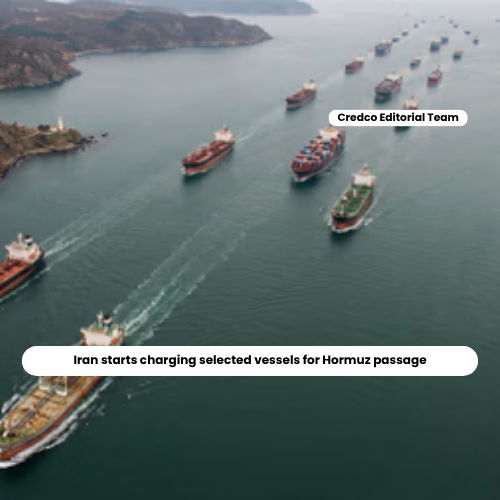
The charges, which can reportedly reach up to $2 million per voyage, are being applied selectively rather than through a formal system. Several vessels are said to have already made payments to secure safe passage.
This development comes as vessel traffic through the strait remains extremely limited in the fourth week of the Middle East conflict. Only a small number of non-Iranian-linked ships have recently crossed Hormuz, with many choosing to stay close to Iran’s coastline during transit.
Industry participants note that the lack of clarity around who may be charged, how payments are collected, and under what conditions they apply is increasing uncertainty for shipowners and cargo buyers attempting to maintain energy flows.
India, which recently facilitated the passage of four LPG cargoes from the Gulf, has stated that international maritime law does not permit any country to impose transit charges through the Strait of Hormuz.
Meanwhile, Iranian officials have previously indicated that such payments could be formalized in the future. A parliamentary proposal has been discussed that would require foreign vessels to pay Iran for secure navigation through the strait following the conflict.
Stay ahead of market trends with the Credco app. For any queries, please reach out via WhatsApp at +91 8448083211.